
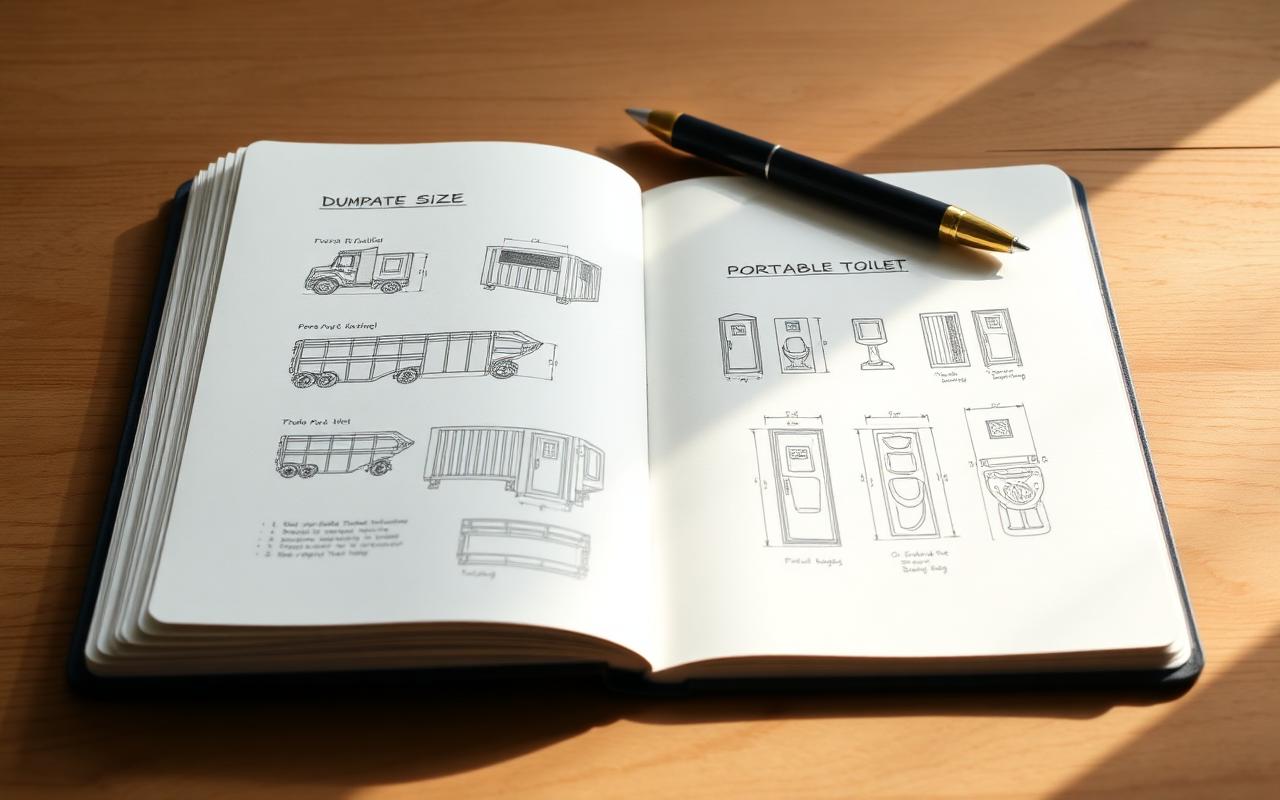
What ADA-compliant means for portable toilets
The Americans with Disabilities Act requires that public events and facilities provide accessible restrooms. For portable toilets, that means ADA-specific units — not standard units with a sign on them.
What makes a unit ADA-compliant
- Wider footprint (typically 5' x 5' interior)
- Ramp or ground-level access (no step up)
- Interior grab bars
- Wider doorway (at least 32 inches clear)
- Floor space sufficient for a wheelchair turn
If a unit doesn't have all five, it isn't ADA-compliant — full stop.
How many you need
The 2010 ADA Standards require at least one accessible unit at any cluster of portable toilets. For event planning, the practical rule is at least 5% of total units must be ADA, or one per 20 standard units, whichever is greater.
Examples:
- 10 standard units → 1 ADA
- 40 standard units → 2 ADA
- 100 standard units → 5 ADA
Placement requirements
ADA units have to be reachable by accessible routes. That means:
- Firm, stable, slip-resistant surface (no soft grass, mud, or gravel that blocks wheelchairs)
- Connected to event paths by accessible routes (no curbs, no steps)
- Not clustered behind standard units in a way that blocks wheelchair access
- Lit at night just like standard units
Construction site rules
OSHA and ADA overlap on construction sites that are open to the public (like exhibition or community-facing projects). Even on closed jobsites, ADA units are required if workers with disabilities are on the crew. Best practice: include ADA in your construction plan from day one.
Who's responsible
The event host, venue owner, or general contractor is responsible for ADA compliance. The rental company supplies compliant units when you order them — we'll flag if your unit count looks short on ADA, but the final responsibility is yours.
Penalties for skipping
ADA complaints can trigger federal investigation and fines that easily exceed the cost of compliance. More practically, you'll alienate guests, workers, and customers who needed access. ADA units are cheap insurance.
Booking ADA units
ADA units are in shorter supply than standard units, especially during peak event season. Book early. Call (833) 652-7865 or see our ADA Portable Toilets service page.
ADA Portable Toilet Requirements
Real-world planning guidance, common mistakes to avoid, and the cost factors that actually matter — written from the field, not from a marketing brief.
ADA Portable Toilet Requirements — FAQs
What does the ADA require for portable toilets?
The 2010 ADA Standards require at least 5% of restrooms at any public event — minimum one — to be wheelchair-accessible. The unit must be on an accessible path of travel, on firm level ground, with door clearance and interior space to accommodate a wheelchair.
What features make a portable toilet ADA-compliant?
Ground-level entry (no step), 60-inch interior turning radius, interior handrails, lower toilet height, hands-free flush, and a wider door with inward-swinging latch. Many ADA units also include baby-changing tables.
What happens if I skip ADA units?
Federal fines start at $75,000 for a first ADA violation at a public accommodation, plus civil liability. Most event organizers find it cheaper to add an ADA unit than to risk the complaint. We include one in every event quote by default.
How to Use This Ada Portable Toilet Requirements Guide
Practical decisions, not generic background.
This guide is written for people actively planning a project — not for general curiosity. The recommendations below come from the same conversations our dispatchers have every day with contractors, event planners, and homeowners. Where industry standards apply (OSHA, ADA, county health), we cite the rule and then explain how it works in practice.
If your situation doesn't quite match the examples here, call (833) 652-7865 and walk it through with us. Two minutes on the phone is faster than thirty minutes of guide-reading for any borderline case.
Common Mistakes to Avoid
- Undersizing on price. The next size up is almost always cheaper than the swap-out, re-load, or overflow fee that follows undersizing.
- Booking too late. Events and peak-season construction routes fill up. Lock dates as soon as you have them.
- Skipping the accessibility unit. ADA units are required for public-access events and routinely required for permit approval.
- Skipping the hand wash station. County health departments require them whenever food is served; OSHA expects access on multi-day construction.
- Treating delivery placement as an afterthought. A two-minute placement walk saves hours of mid-rental moves.
Where to Go Next
For the services covered in this guide, see our services hub, or jump straight to a quote request. Most quotes are returned the same business day.
Need a quote today?
Talk to a real human about your project, get a same-day quote, and lock in delivery.